
A Convinced Baptist
Vindicating Thomas Patient, Part II

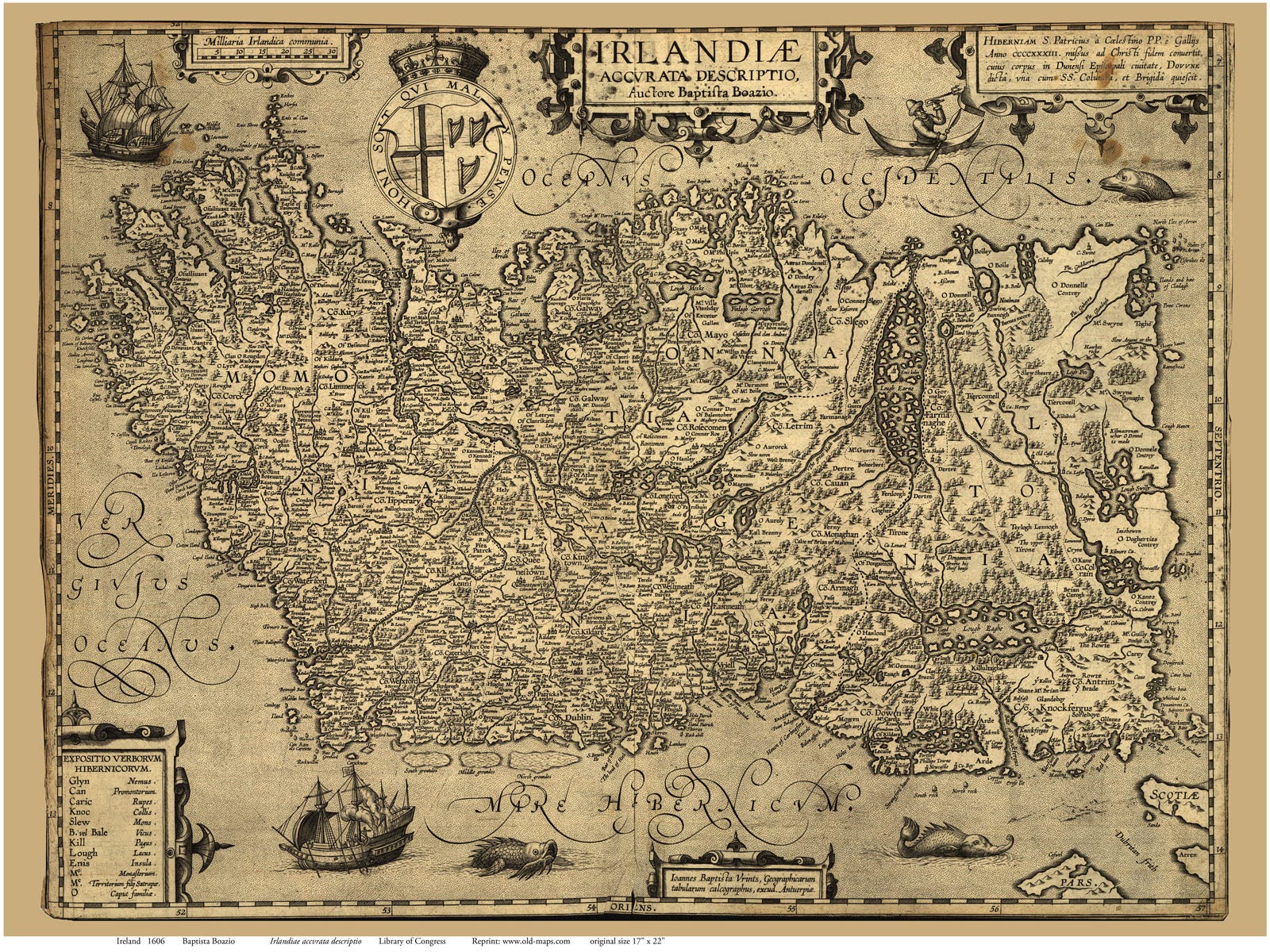
Image from: https://www.old-maps.com/Ireland/irelandmaps2.htm
This article continues the brief account of Thomas Patient’s biography. The next instalments will get into the texts of the debate. At the end of the series I will wrap up Patient’s biography as well.
Weighing the Cost
In the last post, we left Thomas Patient at a crossroads. Would he continue as an Independent paedobaptist, or would his convictions lead him to become a Baptist?
The question, however, was more complicated than that. As imperfect men and women, the precepts of Scripture do not always take hold in our lives because we fear what people might do to us. This fear seized Patient for a time. The cycle of temptations which Patient experienced had built up to this newest trial. He voiced his fears here:
For if by my search and trial in that matter I should come to see grounds swaying in conscience against children’s baptism, that then I should be generally despised and slighted of all the godly in that country, and not only be frustrated of the communion and fellowship with them, but must expect to suffer imprisonment, confiscation of goods, and banishment at least.[1]
Patient had just cause to expect all of these things to come upon him if he became a Baptist, or “Anabaptist” as those of New England would derogatorily call him. Right around the time when Thomas Patient was considering these things, the first laws against Baptists in New England were being passed. The first law, passed on November 13, 1644, reveals the reality Patient’s predicament. Here it is in full:
Forasmuch as experience hath plentifully and often proved that, since the first rising of the Anabaptists, about one hundred years since, they have been the incendiaries of commonwealths, and the infectors of persons in main matters of religion, and the troublers of churches in all places where they have been, and that they have held the baptizing of infants unlawful, have usually held other errors or heresies therewith, though they have, as other heretics used to do, concealed the same, till they spied out a fit advantage and opportunity to vent them, by way of question or scruple; and whereas divers of this kind have, since our coming into New England, appeared amongst ourselves, some whereof (as others before them) denied the ordinance of magistracy, and the lawfulness of making war, and others the lawfulness of magistrates, and their inspection into any breach of the first table [that is, the first four of the Ten Commandments]; which opinions, if they should be connived at by us, are likely to be increased amongst us, and so must necessarily bring guilt upon us, infection and trouble to the churches, and hazard to the whole commonwealth: it is ordered and agreed, that if any person or persons, within this jurisdiction, shall either openly condemn or oppose the baptizing of infants, or go about secretly to seduce others from the approbation or use thereof, or shall purposely depart the congregation at the ministration of the ordinance, or shall deny the ordinance of magistracy, or the lawful right and authority to make war, or to punish the outward breaches of the first table, and shall appear to the court willfully and obstinately to continue therein, after due time and means of conviction - every such person or persons shall be sentenced to banishment.[2]
This law tells us a few things. Like many in England, New Englanders did not distinguish between the Anabaptists and Particular Baptists. They lumped them into one whole class. The Particular Baptists were not characteristically against war, nor did they approve of the infamous events at Munster, when the Anabaptists rebelled and took over the city in 1534/35. The Particular Baptists tried to distance themselves from the Anabaptists. In 1644 when they published their confession of faith, the Particular Baptists acknowledged in the title that they were “commonly (though unjustly) called Anabaptists.”
The law also makes it clear that such persons who openly reject infant baptism as an ordinance would be banished. Hence, we see why Patient could say he would suffer banishment “at least.”
“Buy the truth at any rate, but sell it at no rate.”
Patient turned to the Scriptures and he came upon the text, “Buy the truth, and sell it not” (Proverbs 23:23). Here he learned the valuable principle: “Buy the truth at any rate, but sell it at no rate.”[3] Even if the truth would cost him his life, he would gladly buy it.
So Patient set out to discover once and for all where he stood on the issue of baptism. With renewed vigor, he began to listen to churchmen who could argue for infant baptism. He heard one man preach fifteen sermons on the subject, and as Patient recalls, “urging that in substance which many considerable authors wrote.” He read all day, and stayed up late into the night reading “with much attention, weighting and examining the grounds they urged.”
At last Patient finally came to Baptist convictions, and the Scriptures presented answers to all the arguments he had heard for infant baptism. He relates, “I was enlightened in my understanding to see answers to whatsoever I had heard.” After publicly coming to these convictions, a warrant went out for Patient’s arrest. Patient recalls that this caused him no trouble at all, because he was “filled with unspeakable joy.”[4]
Return to England
In 1644, Patient returned to England. Patient’s convictions were set in stone. He knew what he believed, and why. That is why, upon his return, he was chosen as a colleague and assistant for William Kiffin, pastor of the Devonshire Square Baptist church. Hanserd Knollys served at this same church. That same year, Patient signed the confession of faith put out by the seven Particular Baptist churches which we now know as the First London Baptist Confession of Faith.
Dating the First London Baptist Confession of Faith
The historian Sir Leslie Stephen claims that Patient returned to England in November. This presents us with an interesting possibility. I have searched as best as I could, but nowhere have I found the exact date when the First London Baptist Confession of Faith (1LBC) was written. If Stephen is correct, then, given typical travel conditions, Patient made it back to London in December of 1644.[5]
I believe that this is improbable, because we know that the 1LBC was already in circulation in October of 1644.[6] It might be that Patient left England before the November law was passed. Even before the law, the vox populi was decidedly against the so called “Anabaptists.”
John Owen’s Influential Sermon
We worship a God of providence. He is always working and weaving His plan even when we do not see it. This is especially illustrated by the events that took place in 1649, five years after Patient returned to England.
John Owen, a scholar, theologian, and preacher went up before parliament to offer an address concerning the state of Ireland in a sermon preached on February 28, 1649. It was titled, The Steadfastness of the Promises, and the Sinfulness of Staggering. In it, Owen charged, “do your utmost for the preaching of the gospel in Ireland.”[7]
Parliament was so moved by the sermon that they decided to choose six able ministers to preach the gospel in Dublin with a salary of 200£ a year each. Only a few days later, on March 8, 1649, Thomas Patient was chosen as one of these six. He moved to Ireland with Cromwell’s army. There he worked closely with Christopher Blackwood, a fellow Baptist minister. Patient traveled about as an itinerant preacher to strengthen the churches in missionary endeavors.[8]
In Ireland Thomas Patient finally set down in writing the reasoning behind why he was a Baptist in The Doctrine of Baptism and the Distinction of the Covenants.
Particular Application
1. Thomas Patient experienced persecution in his time for his convictions. Christ guarantees, “In the world you will have tribulation.” This a fact. Yet a promise swiftly follows: “But take heart; I have overcome the world” (John 16:33 ESV). Like Patient, we should rest fully in knowing the joy of the Lord, even in difficult circumstances.
[1] Patient, The Doctrine of Baptism, xi.
[2] J. M. Cramp, Baptist History from the Foundation of the Christian Church to the Present Time (London: E. Stock, 1871), 406-407. https://archive.org/details/baptisthistoryfr1871cram/page/406/mode/2up.
[3] Patient, The Doctrine of Baptism, xii.
[4] Ibid., xiii.
[5] Stephen, Dictionary of National Biography, 32.
[6] Matthew C. Bingham, “English Baptists and the Struggle for Theological Authority, 1642–1646,” The Journal of Ecclesiastical History 68, no. 3 (July 2017): 564, https://doi.org/10.1017/S0022046916001457.
[7] John Owen, Sermons on the Epistle to the Hebrews, Volume 2, Christian Classics Ethereal Library, accessed June 8, 2025, https://ccel.org/ccel/owen/sermons/sermons.ii.iv.v.html.
[8] Stephen, Dictionary of National Biography, 32.
It's hard to imagine the pressures that such men as Patient were under. Would I "buy the truth and sell it not" under those conditions? I like to think I would, but loss of livelihood and liberty would be a great burden to bear. Could I leave my wife and children with no income and suffering scorn and loss of reputation, even among Christian friends and neighbors? Even as relatives, not under such conviction, despise your decision over what seems, to them, a doctrinal trifle. God help me in such a place! Men like Patient should have our admiration.